
Increase Online Sales Fast: Proven Digital Marketing Tips That Deliver Instant Results
Table of Contents
Introduction: Why Businesses Must Increase Online Sales Fast
In today’s hyper-competitive digital marketplace, brands don’t have the luxury of waiting months to see results. Consumers make decisions within seconds. If your website, ads, or content fail to capture attention immediately, they move to a competitor.
To increase online sales fast, businesses must adopt agile, data-driven digital marketing strategies. Quick-impact tactics not only generate immediate revenue but also strengthen your long-term growth foundation.
Let’s explore the most effective methods that can help you increase online sales fast without wasting time or budget.
Identify Quick-Win Opportunities in Your Marketing System
Before investing in new campaigns, analyze your existing digital ecosystem.If you’re not sure where to start, run a proper digital marketing audit first. Often, hidden revenue opportunities are already present.
Start by reviewing:
- Slow-loading pages
- Weak call-to-action buttons
- Confusing checkout processes
- Poor mobile responsiveness
Fixing these issues alone can significantly increase online sales fast.
Also, evaluate underperforming traffic sources. Sometimes a small messaging tweak in email campaigns, social media posts, or landing pages can unlock immediate conversions.
Optimize Your Website for Instant Conversions
Your website is your primary sales engine. If you want to increase online sales fast, your site must remove friction and guide visitors smoothly toward purchase.
1. Improve User Experience (UX)
- Reduce checkout steps
- Enable guest checkout
- Improve mobile speed
- Use clear navigation
Even small UX improvements can produce instant results.
2. Use Conversion-Focused Copy
Your messaging should focus on benefits, not features. Use:
- Clear value propositions
- Emotional triggers
- Urgency words (Limited Time, Exclusive Offer)
- Strong CTA buttons (Buy Now, Get Instant Access)
Persuasive copy directly impacts your ability to increase online sales fast.
Leverage Social Media for Immediate Sales Growth
Social media platforms are powerful tools to increase online sales fast when used strategically.
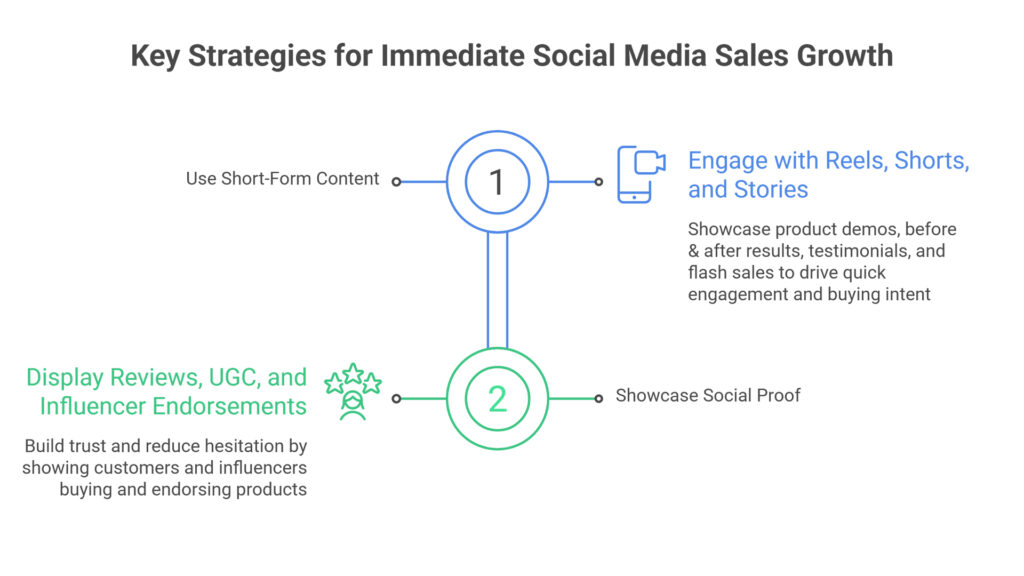
Use Short-Form Content
Reels, Shorts, and Stories drive quick engagement. Showcase:
- Product demos
- Before & after results
- Customer testimonials
- Flash sales
Short-form video increases trust and buying intent instantly.
Showcase Social Proof
Customers trust customers. Display:
- Reviews
- User-generated content
- Influencer endorsements
When people see others buying, hesitation disappears.
Use Email Marketing for Quick Revenue Boost
Email marketing remains one of the highest ROI channels.
To increase online sales fast:
- Send flash sale emails
- Use limited-time discount offers
- Add countdown timers
- Personalize subject lines
Behavior-based emails like abandoned cart reminders can recover lost revenue within hours.
Run High-ROI Paid Advertising Campaigns
Paid ads are one of the fastest ways to increase online sales fast.
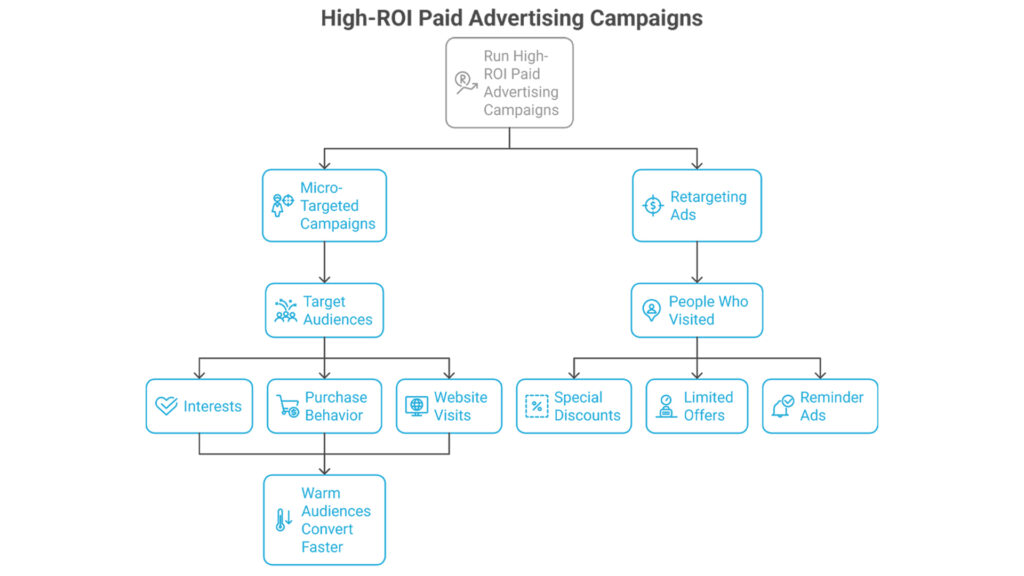
Micro-Targeted Campaigns
Target audiences based on:
- Interests
- Purchase behavior
- Website visits
Warm audiences convert faster than cold traffic.
Retargeting Ads
People who visited your website but didn’t buy are highly valuable. Retarget them with:
- Special discounts
- Limited offers
- Reminder ads
Retargeting campaigns often generate instant sales.
Create High-Intent Landing Pages
Dedicated landing pages convert better than general pages.
To increase online sales fast, your landing page must include:
- Clear headline
- One strong CTA
- Testimonials
- Money-back guarantee
- Secure payment icons
Removing distractions increases conversion rates dramatically.
Craft Irresistible Offers
Sometimes the fastest way to increase online sales fast is simply improving your offer.
Try:
- Product bundles
- Buy 1 Get 1 offers
- Limited-time bonuses
- Free shipping
Scarcity and urgency trigger faster buying decisions.
Use Analytics to Scale What Works
Monitor real-time data:
- Which ads are converting
- Which landing pages perform best
- Which email campaigns generate sales
Once you identify what’s working, scale it immediately. Quick optimization leads to fast revenue growth.
Conclusion: Turn Quick Wins into Long-Term Growth
To increase online sales fast, you need a combination of:
- Optimized website experience
- Strong offers
- Smart advertising
- Social proof
- Continuous data tracking
Instant results are possible when strategy meets execution. The businesses that move fast, test consistently, and optimize intelligently are the ones that dominate the digital marketplace.
Start implementing these strategies today and watch your online revenue grow faster than ever.
How can I increase online sales fast without increasing my budget?
You can increase online sales fast by optimizing your existing website, improving user experience, strengthening your offer, and retargeting warm audiences instead of spending more on new traffic.
Does social media help increase online sales fast?
Yes. Short-form content, customer testimonials, and limited-time offers on platforms like Instagram and Facebook can quickly boost engagement and sales.
What is the fastest way to increase online sales fast?
The fastest way to increase online sales fast is by running retargeting ads, sending flash sale emails, and improving checkout conversion rates. Warm audiences usually convert immediately.